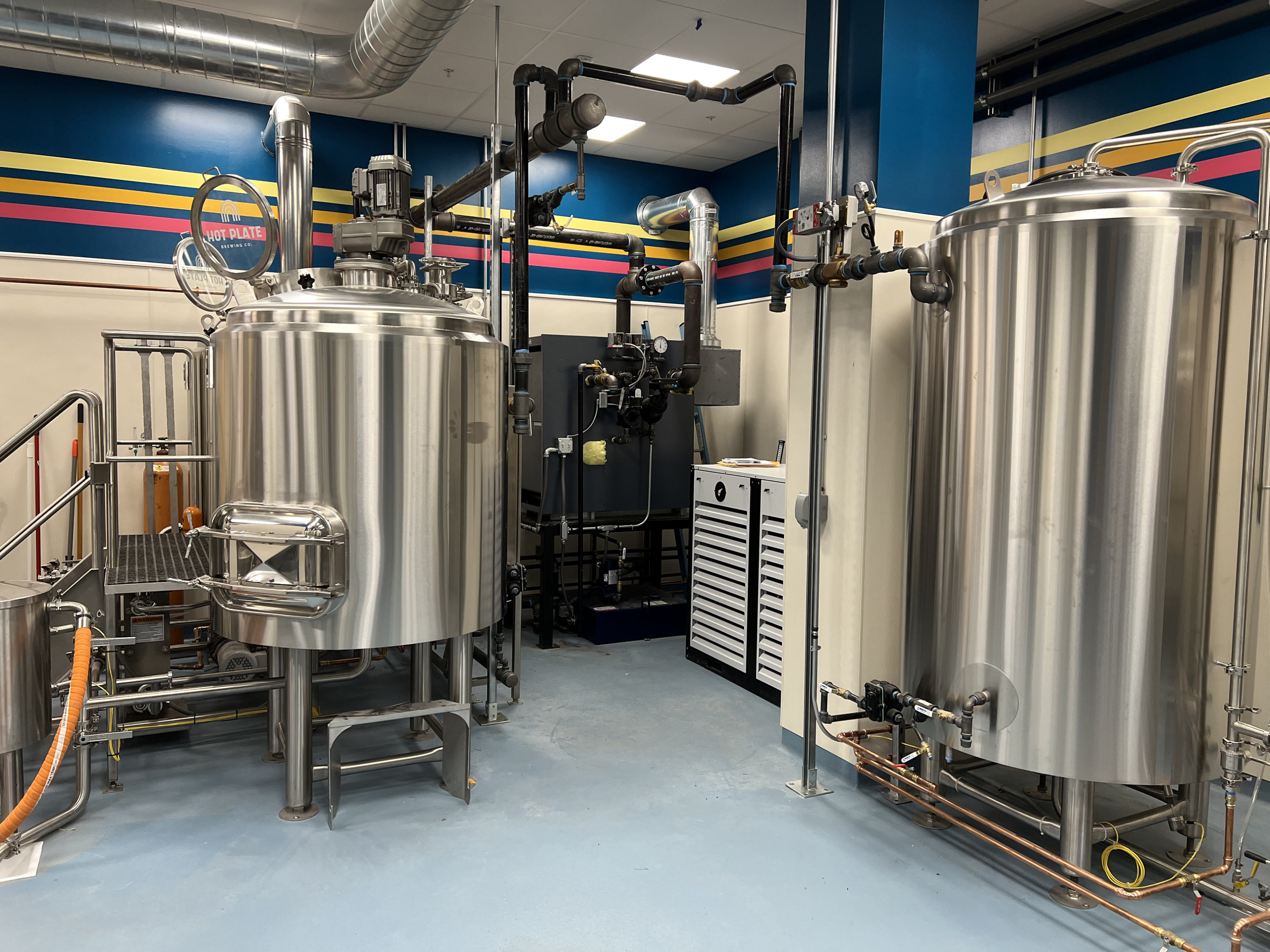

Process piping plays a central role in moving materials through industrial operations.
At Crawford Biotech, we design, fabricate, and install process piping as part of complete systems tailored to your operation. These systems connect tanks and equipment, keeping materials moving safely and consistently through each stage of production.
Our team builds both full process piping systems and skid-based solutions, depending on what your process requires. They also support measurement and control, including flow rate, turbidity, pH, and other key data points.
Process piping is used anywhere materials need to move between tanks, equipment, and key points in your process.
These systems are commonly used in biotech and chemical applications, food and beverage production, and other environments where liquid handling is required.
In each case, we build the piping to match how the process runs, including handling material transfer, maintaining temperature and pressure, and connecting equipment into a complete system.
Systems are built around how your process actually runs, based on material type, flow, temperature, pressure, and cleanability.
Piping is laid out to move material between tanks and equipment, maintain steady flow, support measurement and data collection, and give your team access for operation and maintenance. Learn how systems are engineered.
We select pipes, valves, and fittings that match those conditions and hold up in real operating environments.
Not every project requires a full process piping system. In some cases, a single part of the process needs to be added, modified, or controlled without changing the entire setup.
In these cases, Crawford Biotech builds process skids—self-contained systems designed around a specific function.
These skids are fabricated in-house and built as complete units with piping, pumps, sensors, and controls, depending on the function. Once completed, they are delivered to your facility and connected into the existing process without requiring full system changes.
For example, a skid may be used to measure and adjust process conditions such as pH through controlled material addition and monitoring.
This approach allows targeted changes without reworking the full system.
Once system requirements are defined, process piping moves through design, fabrication, and installation. In some cases, piping is field-fabricated to ensure proper fit with existing or new equipment.
The system is defined based on how it needs to operate, including routing piping between equipment, selecting materials, and ensuring the system meets process and performance requirements. Learn more about equipment design.
Piping and components are built in-house, where material selection, welding, and assembly are controlled to match the design and operating conditions. Field fabrication is also used when needed, with teams working on-site to ensure proper fit and integration. Learn more about stainless steel fabrication.
Systems are installed on-site, connecting equipment, completing fabrication as needed, and ensuring everything is aligned and ready for operation. This includes full equipment installation.
How your piping is designed affects how your operation runs.
When systems are designed and built correctly, they keep production moving without constant adjustments or downtime.
If you’re planning a new system or modifying an existing one, Crawford Biotech works with your team from early design through installation.
Contact the team to discuss your project.